
The Field
A bit of a plan… roughly!
A few years ago, my wife and I were fortunate enough to acquire a couple of acres and obtain planning permission to build ourselves a home and a studio for me in the small village where I grew up. “The Field”, as we call it, holds nearly a lifetime of memories for me. Growing up here, I “helped” the local farmer when I was small with haymaking, lambing, and cutting winter vegetables. It is also very special to my wife and me, as it’s where we had our wedding reception—a perfect summer evening of laughing and dancing with friends and family. And now, it is our family home, with new chapters to be written.
Throughout that long process of applying for planning permission for our home, another plan quietly started to form at the back of my mind. It was very quiet and unassuming initially—in fact, I barely noticed it at the time—but there was a proper little lightbulb moment when I read a wonderful book by James Canton called Renaturing that a friend had given me.
Renaturing is the story of a couple of acres in Essex owned by James Canton and its journey (under his guiding hand) from occasional cricket pitch to wildlife haven over a couple of decades. What a thought! To turn this patch of fairly rough grass, mown by the farmer with his flail a couple of times a year, into a mini wonderland bursting with life and colour and… magic! Okay, it’s no huge landscape-scale rewilding project, but it counts. Every little helps and contributes in no small part to making a difference. From window box upwards, it’s all important! Reading Renaturing sort of gave me permission, in a way. That might sound unnecessary, but it did put form to my thoughts.
So, inspiration—tick. A fair bit of excitement—tick. Motivation—tick. Knowledge… not so much! Yet! Mistakes will be made along the way, but that’s all part of it, I guess. What was that famous observation of Thomas Edison about all of his mistakes?
So, here’s the rough overall plan: create a small wildflower “meadow” area; dig a nice big pond that’ll hold water all year (and maybe a smaller pond that can dry out at times); have a small thicket of trees and shrubby growth (the local jays and squirrels are all over this already). And… well, we’ll see what happens and how things evolve as time goes by!
It’s early February now and really wet! There is a lot of standing water that turns to sucking mud all too quickly, so the best thing is to hurry up and wait—a good time to read and plan! The brambles that are popping up everywhere can rest easy for another few weeks yet. But! There are definitely signs that the seasons are changing. It’s 5pm now and there is still enough light outside to see by. The catkins have been out for a couple of weeks and there is something a bit more perky about the birdsong now. Hopefully it’s not too much like wishful thinking, but there are a few signs of spring coming. That should give me a bit of time to start on another part of my plan! I’m a pretty bad naturalist! I’m not too bad with birds and mammals, but insects, plants, etc.—not good at all! That is something I need to fix.
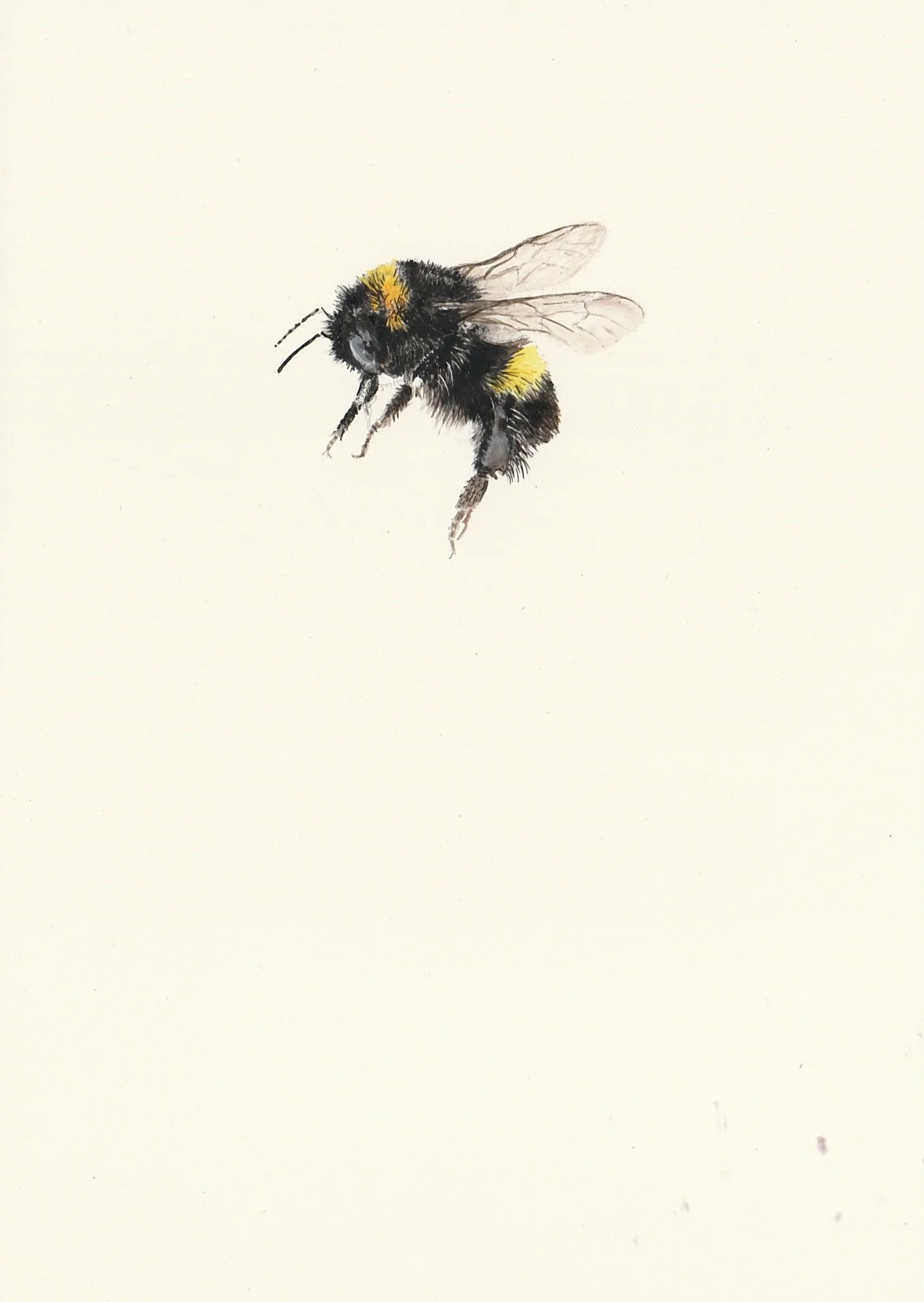
The plan, then, is not just to renature the field but also myself (and our children)! I want to know the names of the plants and creatures that live here too, and understand the life of this place. For me, the best way I can do that is to observe and draw and paint and etch to help me identify. So that is what I’ll do—my own little illustrated natural history of a two-acre field.
On that note, a copy of Gilbert White’s Natural History of Selborne was delivered last week as a bit of inspiration. Time to get started on that!
David